


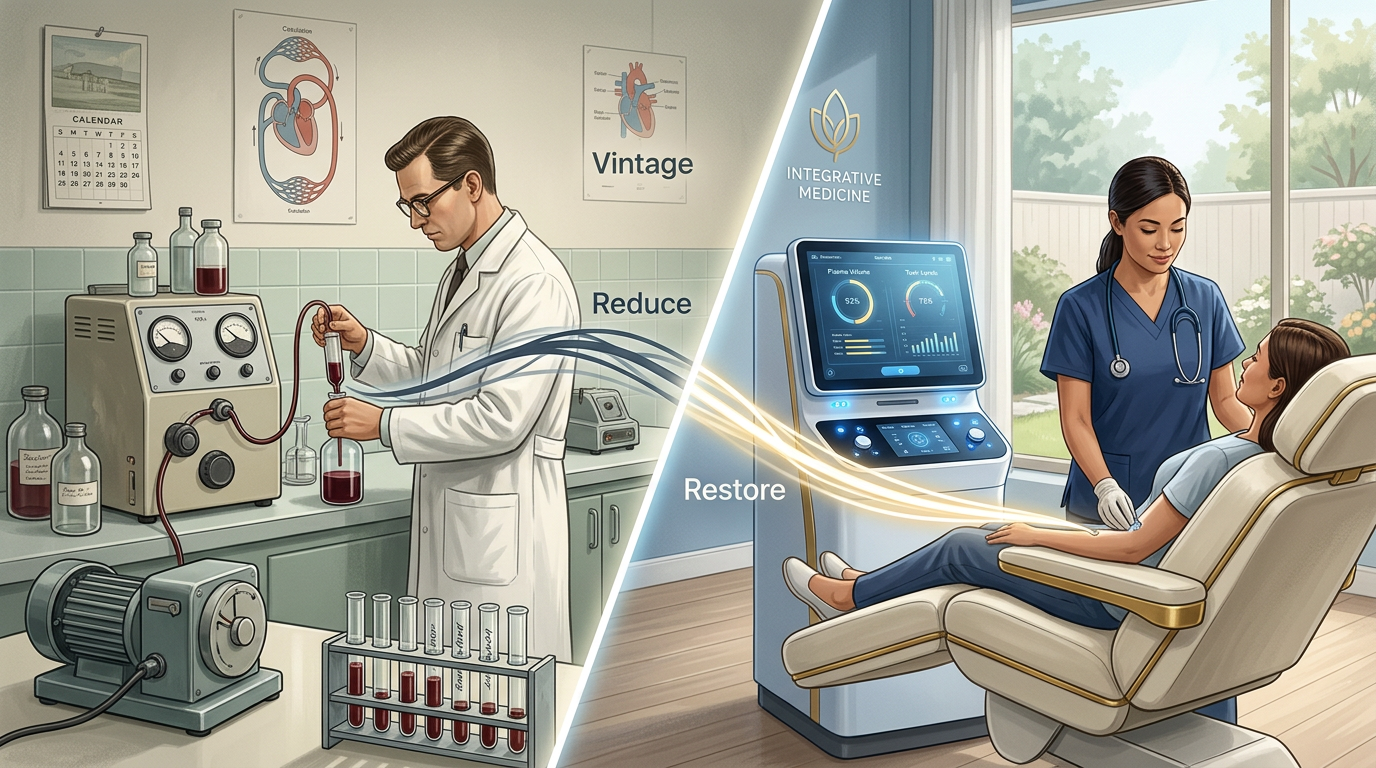
The History of Plasmapheresis: How Therapeutic Plasma Exchange Evolved From Critical Care to Personalized Medicine
Introduction
If you've only recently heard about plasmapheresis, you're not alone.
Many people assume therapeutic plasma exchange (TPE) is a brand-new medical breakthrough because it is only now beginning to appear in conversations about integrative medicine, longevity, and personalized health.
The reality is quite different.
Plasmapheresis has been used in hospitals for more than 60 years.
Long before it was discussed in wellness circles, physicians were using therapeutic plasma exchange to help patients with severe autoimmune diseases, neurological disorders, blood disorders, and transplant-related complications. Today, researchers continue to explore how the same technology may support carefully selected patients with chronic inflammatory and immune-mediated conditions.
Understanding where plasmapheresis came from—and how it continues to evolve—helps explain why it has become one of the most intriguing developments in modern integrative medicine.
Integrative physicians are studying how plasmapheresis may fit into personalized care for selected patients alongside nutrition, ozone therapy, regenerative medicine, and lifestyle interventions.
The Early Years
Before modern plasma exchange existed, physicians had very few ways to remove harmful substances circulating in the bloodstream.
Scientists knew that many diseases involved antibodies, abnormal proteins, or other blood components, but they lacked efficient technology to selectively remove them.
During the 1950s and 1960s, advances in blood separation technology made it possible to isolate plasma while safely returning the patient's blood cells.
This marked the beginning of therapeutic plasma exchange.
Rather than treating only symptoms, physicians could begin reducing certain circulating disease-associated substances themselves.
Hospital Medicine Changed Everything
As the technology improved, hospitals around the world began using plasmapheresis for conditions in which harmful antibodies or abnormal plasma proteins were known to play a significant role.
Over the following decades, therapeutic plasma exchange became an accepted treatment option for selected neurological, autoimmune, hematologic, and transplant-related disorders.
Organizations such as the American Society for Apheresis (ASFA) continue to publish evidence-based guidelines that help physicians determine when plasma exchange is considered first-line therapy, second-line therapy, or appropriate only in carefully selected situations.
This ongoing review process reflects an important principle of modern medicine: not every condition benefits equally from the same treatment, and recommendations evolve as new evidence becomes available.
Better Technology Changed Patient Care
The earliest plasma exchange procedures required larger equipment, longer treatment times, and more complex monitoring.
Today's systems are dramatically different.
Modern therapeutic plasma exchange machines are designed to:
- Separate plasma more efficiently
- Preserve blood cells
- Continuously monitor circulation
- Improve patient comfort
- Reduce procedure times
- Enhance safety through advanced monitoring systems
While every medical procedure carries risks, decades of technological improvements have helped make therapeutic plasma exchange a well-established procedure in appropriately selected patients.
Why Integrative Medicine Became Interested
This is perhaps the most exciting chapter in the history of plasmapheresis.
Traditionally, plasma exchange focused on acute medical conditions treated in hospitals.
Today, many integrative physicians are asking a different question:
Could reducing selected circulating inflammatory or immune-related substances help support recovery in carefully selected patients with complex chronic illness?
This question has sparked growing interest in studying therapeutic plasma exchange alongside comprehensive treatment strategies that address nutrition, metabolism, immune function, detoxification, hormone balance, and cellular health.
Rather than viewing plasma exchange as a stand-alone solution, many physicians see it as one potential component of a broader, individualized care plan.
Research in this area continues to evolve, and not every proposed use has the same level of supporting evidence. Thoughtful physician oversight remains essential when considering emerging applications.
More Than "Removing the Bad"
One of the biggest misconceptions about plasmapheresis is that the procedure itself is the treatment.
In reality, many physicians view plasma exchange as the beginning of a larger process.
After selected circulating substances have been reduced, attention often turns toward supporting the body's ongoing recovery through individualized strategies such as:
- Nutritional optimization
- Lifestyle medicine
- Hormone evaluation
- IV nutrient therapy
- Medical ozone therapy
- Regenerative medicine
- Ongoing laboratory assessment
At Linette Williamson, MD, this philosophy aligns with two guiding principles:
Reduce what may be interfering. Restore what the body needs.
This balanced approach reflects the belief that meaningful healing often requires both reducing physiological burdens and creating an environment where the body can function more effectively.
Looking Ahead
Plasmapheresis continues to evolve.
Researchers are exploring its role in areas ranging from autoimmune disease and chronic inflammation to cardiovascular health, aging, and environmental exposures. While many of these applications remain under investigation, the growing body of research reflects an important trend in medicine: moving beyond symptom management toward understanding the biological processes that contribute to disease.
As our understanding of immune regulation, inflammation, and personalized medicine continues to expand, therapeutic plasma exchange may play an increasingly important role for carefully selected patients as part of physician-guided, evidence-informed care.
Frequently Asked Questions
Is plasmapheresis a new procedure?
No. Therapeutic plasma exchange has been used in hospitals for decades. Although many people are only now hearing about it through integrative medicine practices, it has a long history in the treatment of selected autoimmune, neurological, hematologic, and transplant-related conditions.
Why are more people talking about plasmapheresis now?
Advances in technology, increased interest in personalized medicine, and growing research into inflammation and immune regulation have expanded conversations about therapeutic plasma exchange beyond traditional hospital settings.
Is plasmapheresis considered experimental?
The procedure itself is well established for many recognized medical indications. However, some newer applications being explored in integrative medicine remain emerging or investigational. The level of scientific evidence varies depending on the condition being considered.
Why haven't most people heard of plasmapheresis?
Historically, therapeutic plasma exchange was primarily performed in hospitals and specialty medical centers for serious conditions. As research evolves and awareness grows, more patients are becoming familiar with the procedure and its potential role within individualized care.


.png)