


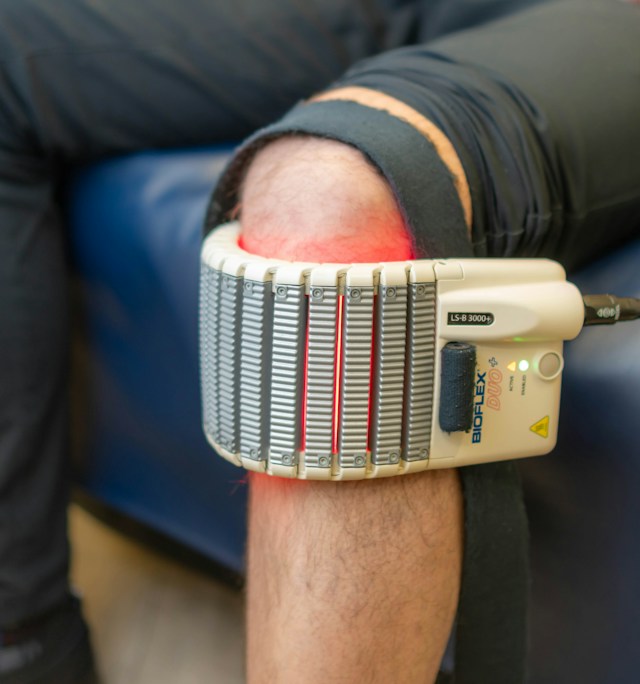
Patients often notice the light panels and specialized devices in our treatment room and ask the same honest question. Is this legitimate medicine, or is it just another wellness trend dressed up in modern packaging? It is a fair thing to wonder, especially with so many devices marketed online with big promises and little explanation.
Dr. Williamson only brings a tool into her practice if she can explain how it works and defend its use clinically. Advanced Light Device therapy, often shortened to ALD therapy, is one of those tools. This piece walks through what it actually is, how it fits into a physician-led approach to recovery, and why it earned a place in our treatment room.
What Is Advanced Light Device Therapy?
ALD as a Category, Not a Single Device
Advanced Light Device therapy is not one specific machine. It is a category of technology that uses targeted wavelengths of light, including red, near-infrared, and other multi-wavelength combinations, to interact with cells and blood. Different devices within this category are built for different purposes, from surface-level tissue exposure to direct interaction with circulating blood.
Many people assume all light therapy devices work the same way. In reality, the wavelength, delivery method, and treatment target all change what a device is designed to accomplish. Understanding ALD as a category, rather than a single gadget, helps explain why physicians select specific devices for specific goals instead of using one tool for everything.
Where TheraLumen and HemaLumen Fit In
Within the ALD category, TheraLumen and HemaLumen are two specific technologies we use in our Encinitas practice. Both apply light therapy principles, but each is designed with a distinct role in a treatment plan. Rather than duplicating a full technical breakdown here, it is worth knowing these devices represent applied, physician-selected examples of the ALD category in action.
How Light Interacts With the Body at a Cellular Level
Mitochondria and Cellular Energy, Explained Simply
Every cell in the body contains mitochondria, which function as small energy generators. These structures convert nutrients into usable energy through a process that depends on efficient cellular function. When mitochondria work well, cells have the energy needed to repair themselves and manage everyday stress.
Certain wavelengths of light appear to interact with components inside mitochondria, potentially supporting this energy production process. Research in this area, including studies referenced by organizations such as the National Institutes of Health, continues to explore exactly how these interactions occur. The general idea is straightforward even when the biochemistry gets complex: light exposure at the right wavelength may help cells generate energy more efficiently.
What Cellular Recovery Means for a Patient
Cellular recovery is a term that sounds abstract until it is connected to daily experience. Many people don't realize that persistent fatigue, slow healing, or lingering inflammation often trace back to how efficiently cells are producing and using energy. When that process is sluggish, the effects show up in ways patients actually feel.
In practical terms, supporting cellular recovery may translate to:
- Feeling less depleted after physical or mental exertion
- Noticing steadier energy throughout the day rather than sharp crashes
- Experiencing a shorter recovery window after strain, illness, or overexertion
What ALD Therapy May Help Support
Inflammation and Recovery From Strain or Injury
Chronic, low-grade inflammation is one of the most common concerns we address in this practice. Light therapy at specific wavelengths appears to influence inflammatory signaling in ways that may support the body's natural recovery process. This makes it a therapy many patients ask about when dealing with joint discomfort, muscle strain, or slow post-activity recovery.
Circulation and Tissue Oxygenation
Some ALD applications, particularly those involving direct interaction with blood, are used to support circulation and oxygen delivery to tissue. Improved circulation can play a role in how efficiently nutrients and oxygen reach cells that need them for repair. This is part of why light therapy is often paired with treatments that already involve the bloodstream.
Patients dealing with sluggish circulation, whether from inactivity, aging, or an underlying condition, sometimes notice this as part of their care plan. As with inflammation support, individual results depend on the full clinical picture, not the light therapy alone.
Myth vs. Fact: Common Misconceptions
Because ALD therapy sounds futuristic, misconceptions are common. Clearing a few up helps set realistic expectations.
- Myth: Any light therapy device sold online works the same as clinical-grade equipment. Fact: Wavelength precision, intensity, and delivery method vary widely, and these differences affect outcomes.
- Myth: Light therapy replaces the need for other medical evaluation. Fact: It is a supportive therapy used within a broader, physician-guided plan, not a standalone diagnosis or treatment.
- Myth: Results are immediate and dramatic after a single session. Fact: Most patients notice gradual changes over a series of sessions, consistent with how cellular processes actually work.
What a Session Looks Like in Our Office
Walking Through a Typical Visit
A typical ALD session in our Encinitas office is calm and straightforward. Patients are seated or reclined comfortably while the device is positioned according to the treatment goal. Sessions are non-invasive, and most patients describe the experience as relaxing rather than uncomfortable.
Session length varies based on the specific device and the reason for treatment. Dr. Williamson or her clinical team explains what to expect beforehand, so there are no surprises once treatment begins. Many patients say the simplicity of the process is reassuring, especially if they expected something more intense.
How It Fits Alongside Other Therapies
ALD therapy is rarely used in isolation. It is often layered into a treatment plan that may include EBOO, nutrient support, or hormone evaluation, depending on what a patient's underlying health picture requires. The goal is always to address root causes rather than treat symptoms in isolation.
This integrative pairing is part of what distinguishes a physician-led approach from a standalone wellness device used at home. Dr. Williamson determines sequencing and frequency based on each patient's history, current health status, and specific goals.
Who Tends to Ask About This Therapy
Common Patient Profiles
Patients who ask about ALD therapy tend to fall into a few recognizable groups. Some are managing chronic inflammation or joint discomfort that has not responded well to conventional approaches alone. Others are athletes or active adults looking to support recovery time between physical activity.
A third group includes patients already working with us on hormone balance, gut health, or chronic fatigue, who are curious whether light therapy could complement their existing plan. Across all these groups, the common thread is a desire for evidence-based options beyond standard symptom management.
Questions Worth Bringing to a Consultation
If you are curious whether ALD therapy fits your situation, a consultation is the right place to ask specific questions. Consider bringing up:
- What is the biological reasoning behind recommending this therapy for my specific concern?
- How would this fit alongside treatments I am already receiving?
- What kind of timeline is realistic for noticing any change?
- Are there any reasons this therapy might not be appropriate for my health history?
Finding Clarity Before You Try Something New
Health decisions feel more manageable when you understand the reasoning behind them, not just the marketing behind them. Advanced Light Device therapy is a good example of a technology that sounds impressive on the surface but makes far more sense once you understand the cellular process it supports and the physician judgment behind its use.
If you have been curious about the light therapy devices you have seen in our office, or you are simply trying to understand your options for supporting recovery and reducing inflammation, we would rather explain the reasoning clearly than leave you guessing. That clarity is the foundation of how care decisions are made here.
Talk With Our Team About Your Recovery Goals
If you want to know whether ALD therapy makes sense for your specific health picture, our team is glad to walk through it with you. Every recommendation starts with a conversation about your history, your goals, and what has or has not worked for you so far.
Linette Williamson MD
317 North El Camino Real, Suite 107, Encinitas, CA 92024
Phone: (760) 875-2627
Website: linettewilliamsonmd.com
Hours: Monday through Thursday, 9:00 AM to 4:00 PM; Friday, 9:00 AM to 1:00 PM
Telehealth appointments are available for patients located in Florida.
This content is for educational purposes only and does not constitute medical advice. Please consult a qualified provider to discuss your specific situation.


.png)